

Is It Legally Required To Register Your Drone
Drone rules: Do y'all need to register your drone? Where can y'all wing it legally in United states of america, United kingdom of great britain and northern ireland and beyond?
The recent launch of the DJI Mini 2 has highlighted the biggest growth area in drones: lightweight. The Mavic Mini and Mini two are designed to weigh below the 250g (0.55lb) weight across which yous'll need official registration in the USA and Canada, but that isn't enough to go on the British cops away.
Innovation always leads to new demand for new regulation. Thebest drones certainly mark such a revolution, opening the skies to a broad range of consumers – with a far wider appeal than the older niche hobby that was radio-controlled planes.
At that place were e'er rules, of class, just now the globe is watching, so regulations have been tightened and formalized in a manner which was simply not truthful when the first drones appeared. Nearly significantly, nearly every drone with a decent camera, or its pilot, or both now needs registration.
Information technology's also very likely you'll demand to pass some kind of test, even if information technology is online, to prove you can wing a drone safely and legally. Below is our good guide on what you can and tin't do – and how to stay on the right side of the law with your quadcopter.
Defining devices
The term "drone" seems to exist the one we're stuck with, but information technology's really 1 the early community of hobbyists never really liked. It dates back to early military unpiloted 'target' aircraft used for practise, and is associated with unmanned bomb raids in more recent conflicts. Hobbyists tend to prefer "quad," brusque for quadcopter. That's a bit specific for regulators though, who likewise want the rules to apply to drones with 6 or more propellors, or those shaped like flying wings.
To side-pace this confusion, the lawyers generally stick with the terms Unmanned Aircraft System (UAS), Unmanned Aeriform Vehicle (UAV) or Remotely Piloted Shipping Systems (RPAs). Most drones besides characteristic a photographic camera, which technically makes information technology a Surveillance UAS, or sUAS, which matters.
Weight
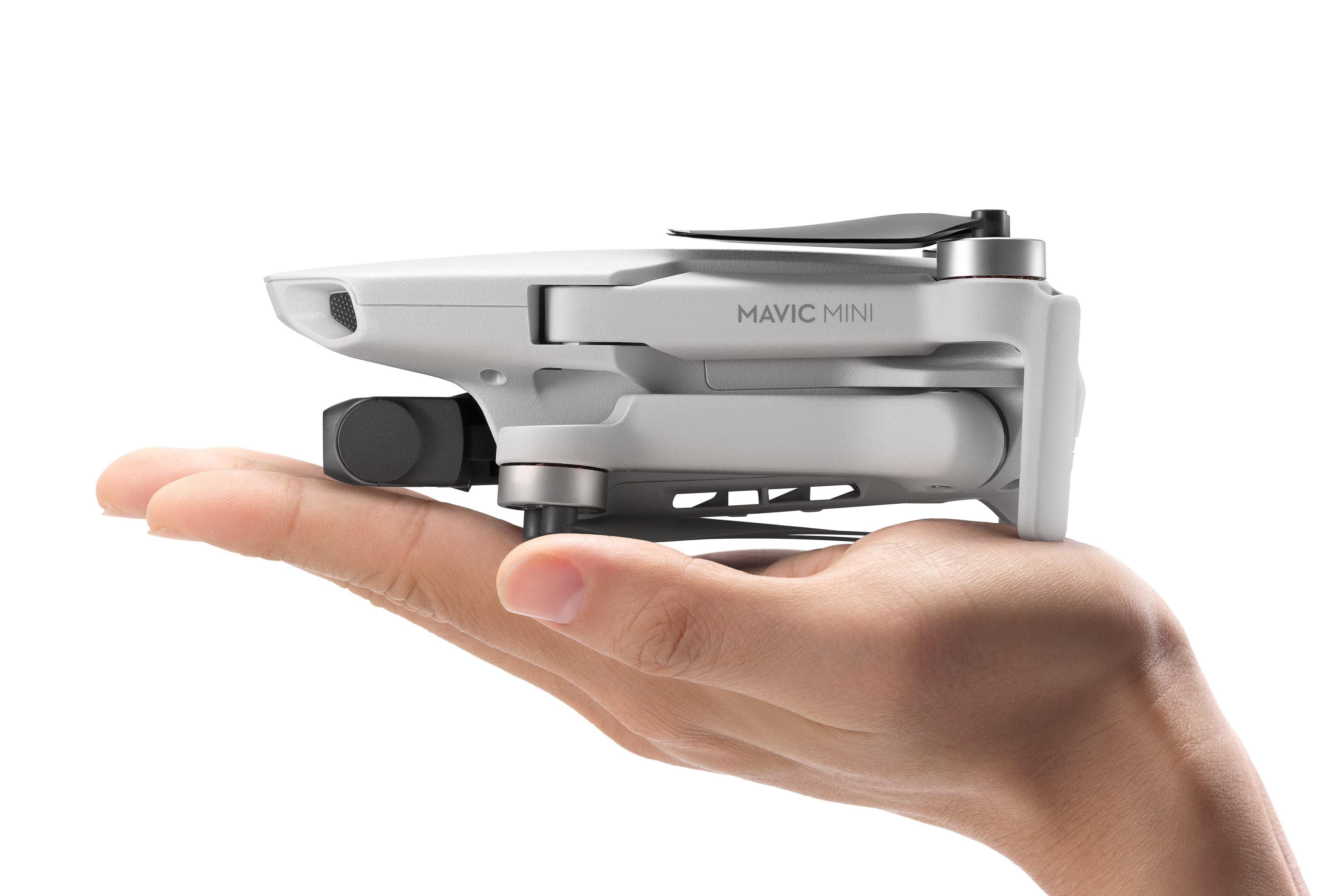
The big get-out from registration was (largely still is) weight. The UK, USA, Canada and China only require registration for UAVs which have a take-off weight (including battery) of 250g or more, which is why the DJI Mavic Mini, and successor Mini two, were such large news. In the Uk, however, the presence of a camera on fifty-fifty a sub 250g drone means the Civil Aviation Say-so (CAA) are very clear that information technology is "not a toy" and then an Operator ID will all the same be required.
UK Flyer ID and Operator ID
The UK Operator ID is a single certificate, a bit like an insurance document (without the insurance), that allows y'all to register every bit the legal owner of a drones. It needs renewing for £9/year, every twelvemonth, from the UK Ceremonious Aviation Authority, and you demand to exist 18 years quondam to get one.
The Operator ID is a piece of paper to keep in your pocketbook, just the Flyer ID. The Flyer ID is specific to the UAV in question, and required only on all aircraft over 250g (just encouraged for all aircraft, and costless so there isn't a good reason to avert information technology). It is the Flyer ID which is accompanied with a noesis exam (pass marking 75%) and the minimum age is 12 but it is valid for 5 years.
UK/European union Cap 2012
The copied the system information technology'd been political party to developing while still a member of EASA. Likewise as the ID documents, it centers effectually a risk table in which flights are categorised in terms of low-risk (Open), medium-run a risk (Specific) and high-risk (Certified). The concluding 2 require special paperwork, only 'Open' is divided into A1 (Over people), A2 (Close-to people) and A3 (Far from people).
The rules table restricts you to sure shipping categories depending on which flight blazon you're undertaking; A1 needs to exist a toy, A2 which is 30m away from people, and A3 which is 150m horizontally. Drone classes (C0-C4) will emerge with new launches in the adjacent two years or then, and will exist compulsory in 2023. For now, no drones accept earned a grade. They will be earned at product launch, similar a safety certificate, but until then all drones are existence called 'legacy drones.'
There are some curious anomalies, for instance a legacy drone is limited to 2Kg in A2, while a certified C2 tin be up to 4Kg in the A2 infinite. That means an Inspire 2 is stuck out in A3 without specific authorisation. So, too, is any legacy drone over 250g unless you pay for and sit an A2 Certificate of Competence (CofC) theory course which volition get yous reprieve until 31st December 2022 before you'll demand a new drone to pick up that class marking.
USA
The land of the free has broadly adopted a straightforward approach to drone rules but are now moving toward a like product approval approach. UAVs in the USA volition be required to fit ADS-B, a device which broadcasts the drone'due south location to nearby shipping and preclude the shipping from taking off if this system is unavailable. Somewhat unfairly given the delicate balance of drone design, the FAA are likewise requiring ADS-B to be retrofitted to older drones as well and – more unreasonably too – haven't provided a lot of detail about how this might be done, still, manufacturers have 18 months to implement the engineering, and pilots another 12 months after that to comply. Oddly, for quite different reasons, pilots in the UK and USA are being compelled to purchase new equipment in the next two years simply to keep up with regulations (though at least in the U.s. a Mavic Mini 2 is excused thanks to its weight).
While U.k. and Europe have also done away with the distinction between commercial and hobby utilise, in the United states a 'Part 107' is needed if you're commercializing your content in any way whatever (even earning a couple of cents YouTube royalty). Yous tin find courses and practice tests online at companies like https://remotepilot101.com/. If you lot accept a Part 107, it'southward possible to wing at night and over people without prior approval in certain circumstances explained below.
Canada
Recreational flying in Canada requires the pilot to pass a 'Modest Bones Test', for which the pilot must exist over fourteen years to take, or face a $ane,000 fine. This will permit you lot to bear 'basic operations' (flight at least 30m from bystanders, 3 nautical miles from an drome or 1 from a heliport and in uncontrolled airspace). Yous also demand to mark tyour drone with a registration number from Transport Canada and, should you want to undertake 'advanced operations' you will demand to be over sixteen and pass a 'Small Advanced Examination' with professional review. Canada Government Site.
Carry your certificate!
It should go without proverb, but the certificates we discuss here, in one case obtained, must exist kept with yous when you lot're out flight. It's also very sensible to carry a pre-flight checklist. A simple list of things to practice, like set up the automatic return to home acme in a higher place the height of nearby structures, volition print anyone from an aviation authority ultimately will simply want to know if yous intend to human action safely or non. Security agencies can likewise review your paperwork on request, of course.
Drone rules around the world
| USA | UK | Canada | |
|---|---|---|---|
| Range | VLoS | 500m / 0.31 miles (and visual) | VLoS |
| Ceiling | 120m / 400ft | 120m / 400ft | 120m/400ft |
| Bystander distance | Not specific | Over - 150m (Depends on weight) | 30m |
| Registration weight | 250g-25Kg | 250g-20Kg | 250g-25Kg |
| Registration fee | $5 / iii years | £nine / year | $5 |
| Registration site | FAA Drone Zone | Ceremonious Aviation Authorization | Transport Canada |
Us registration site: FAA Drone Zone
UK registration site: Civil Aviation Authority
Canada registration site: Send Canada
Ceiling
In all the jurisdictions here – and indeed almost – drones are restricted to flight to a maximum superlative of 120m/400ft AGL (In a higher place Footing Level). That means almost the height of the ground direct beneath the drone (non including buildings). For the almost part this stays out of the way of ceremonious aviation, which tends to operate at 500ft or in a higher place except when landing.
You must ever be mindful, nevertheless, of helicopters entering the area you lot're operating in, and land as quickly every bit possible. Some drones can technically fly much college – into the thousands of feet – but this is illegal and very unsafe; wind at these altitudes could easily whip your drone away from yous.
Range & Visual Line of Sight (VLoS)
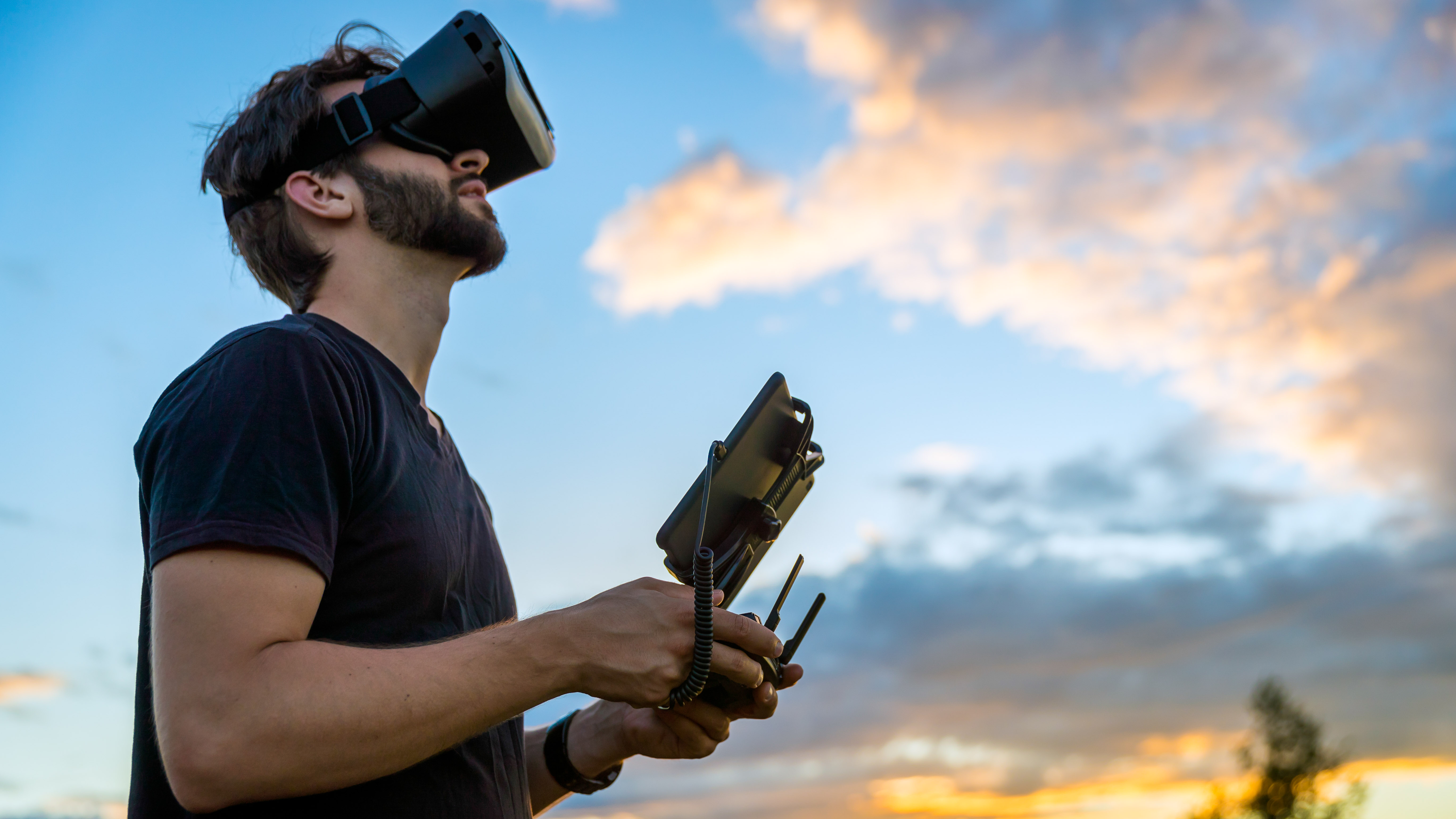
One of the biggest selling points of a drone is the distance the drone can fly from you, with the likes of DJI and Parrot talking almost 4,000m (two.five miles) and in some cases viii,000m (five miles) transmission distances.
In virtually countries these distances are a moot point. In the U.k., and much of Europe, the limit for distance from the pilot to the drone is 500m (550 yards), and the pilot must have Visual Line of Sight (VLoS), meaning they must take an unobstructed view of the aircraft from where they're standing (and must actually be able to see it – not just the general area of airspace). What you can see on the LCD monitor is not considered skilful plenty.
In the Us, VLoS is a requirement, but there isn't a specific distance limit. In both cases, though, VLoS is considered to be less for a smaller shipping which can't physically be seen at that distance. It's worth bearing in mind that radio waves – the command signals – besides travel in straight lines, so this regulation will help ensure y'all don't lose your drone.
Keeping your distance
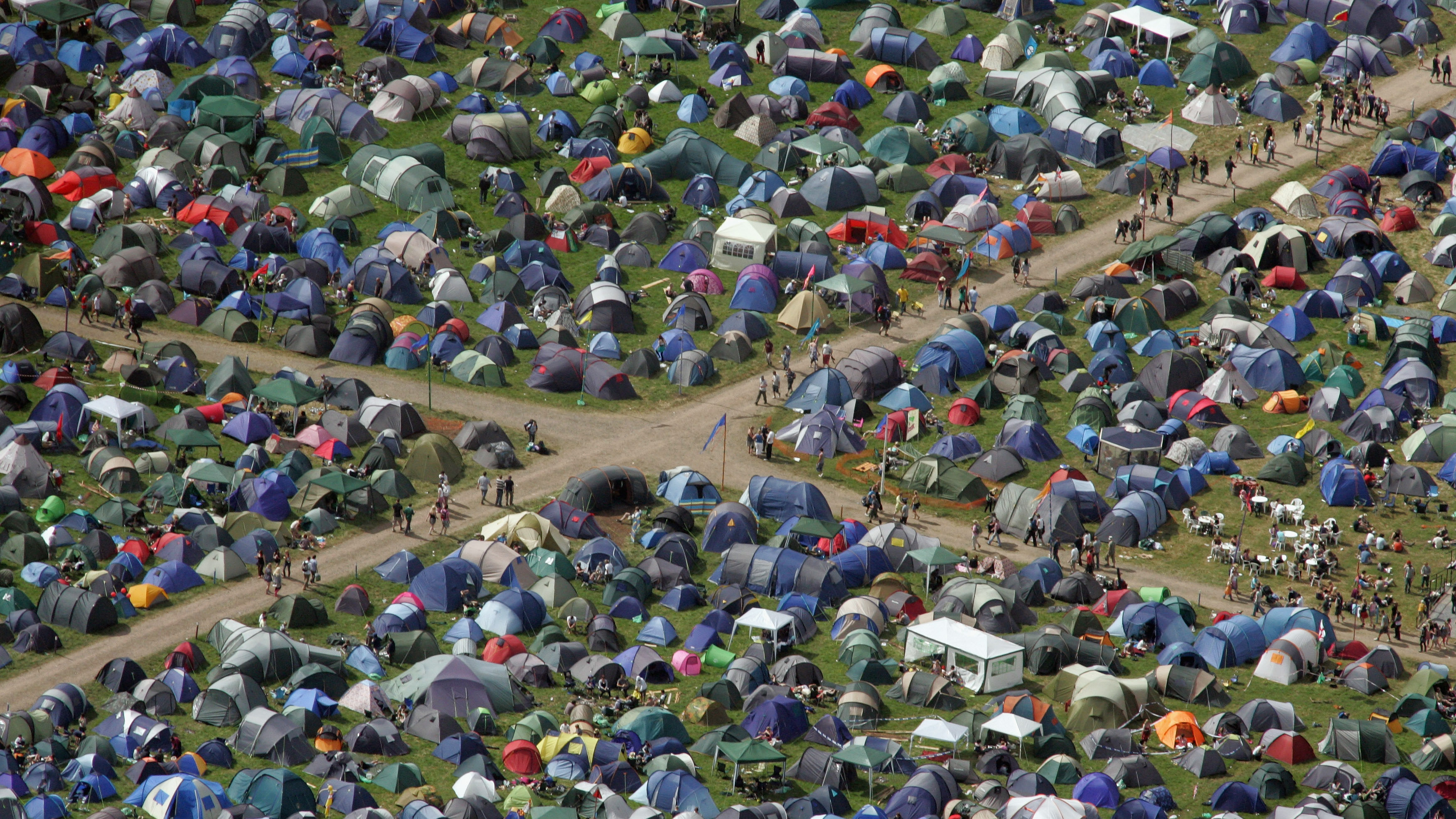
In the United kingdom, y'all must proceed your drone at least 50m horizontally from 'uninvolved persons' unless it falls within A1 (sub 250g) category in which example you can fly over people (only not crowds), fifty-fifty in residential, commercial, industrial and recreational areas. Bigger or older drones face farther restrictions, then check the CAA table.
Rules in the United states of america are similar if a little more straightforwardly worded – you're not allowed to fly over groups of people, stadiums, sports events, or near emergency response efforts. It should probably go without saying, but you're also meant to exist sober! Dig a fiddling deeper, though, and you'll find inconsistent regulation between FAA rules on drones and model shipping.
Controlled airspace & airports
Airports are considered no-fly zones for UAVs for obvious reasons. In the U.k. an 'Airport Traffic Zone" is a radius of 2.v nautical miles from the center of the longest runway, with an additional rectangular protection zone 1km wide and 5km from each tip of the runway. For a unmarried-runway airport the resulting no-wing zone looks similar a scrap like the London Underground logo.
In the United states you but need to exist five miles from the airdrome, while in Canada the altitude is iii nautical miles (five.6km).
The easiest way to find out if you're as well near an airdrome is to use ane of the online tools. In the UK the excellent Drone Help app by the National Air Traffic Service (NATS) is available on iOS and Android. This likewise shows alive notifications – called NOTAMS – of temporary restrictions for events like an air show.
In the USA, there are similar services includingAirMap and the much improvedB4UFly from the FAA itself but developed with Kittyhawk, for iOS, Android or as a web visit.
Information technology's worth remembering that many drone manufacturers use their GPS systems to geofence sensitive locations like airports, only they practise not necessarily use the correct legal distances. DJI provide ani nteractive map which indicates their geofencing, and is a great way to check for airspace issues whatever brand you use.
In the United states, new rules volition come up into force in March 2021 which will prevent a drone hovering over a public road (except to pass over information technology) or public assembly unless the member of the public associates is sheltered with 'reasonable protection from a falling' sUAV.
Night Flying
In the United kingdom of great britain and northern ireland flying should exist in the hours of 'daylight' (from 30 minutes before sunrise to 30 minutes after official sunset). Night-flight requires CAA approval. In the United states this used to be true, merely when the FAA new rules go into forcefulness at the end of February 2021 they permit night flying merely of drones fitted with Remote ID (ADS-B), or at certain FAA-recognised locations (which weren't specified in the announcement of the rule). The FAA sees this as a way of making it easier for a growing market sector.
USA No-fly Zones
You might recollect the much physically bigger USA would offering more than space, but in practice in that location are plenty of restrictions:
• National Parks
• Military bases
• Inside 15 miles of the White House
• Campsite David
• Marine Protection Areas
• Sports arenas
• Wildlife refuges (the minimum flight pinnacle over these is 2,000ft, well above the max height for UAVs.
• Prisons
• Virtually, but non all, Land Parks
You lot should besides remember that the United states sometimes acts like fifty different countries when information technology comes to legal matters.
Uk No-Fly Zones
Information technology won't be a surprise to know you're not allowed to wing over prisons, but that's merely the offset of a very long list of places which accept banned drones. These include:
• All London Imperial Parks
• Ability Stations
• Military bases
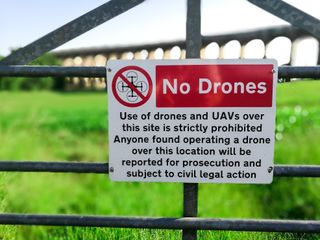
• Numerous councils, including Chelsea, Lewisham, Dagenham, Barking – look for bylaws which should be posted.
You lot can become permission from the CAA on a case-past-case basis, an indeed from airports, if you run across the requirements.
Canada No-fly Zones
Just like its neighbour to the south, Canada bans:
• National Parks
• Military bases
• Emergency operations (disaster relief or active policing)
• Advertised events (concerts, sports)
• Crossing borders
Land owners
At some point in your flight, you lot're going to need to take off and country. That ways you're going to demand the permission of the person who'southward land you'll exist doing that from (since the bubble discussed above very much includes the ground when the drone is on or virtually it).
Plenty of NGOs own big tracts of UK land and are not drone-friendly, similar the National Trust, which has opted for a "strict policy."
When you run across videos online that seem to contravene the rules nosotros've seen, either the users had permission or were breaking them. If it'due south the latter, they've only posted a time-stamped piece of evidence!
Commercial employ
In the UK and Europe the disruptive and largely unnecessary distinction between hobby and commercial employ has been retired, merely if you fall nether the jurisdiction of the FAA it'southward very easy to find that you've become a commercial operator. Shoot a video for someone else's Instagram or YouTube and, especially if they're promoting services, y'all're effectively providing a service to a commercial customer (even if you didn't accuse them).
Y'all can noticeUnited states'southward FAA definition hither; crucially commercial use comes with boosted regulatory requirements, but the qualifications required can too yield certain advantages when comes time to distance limits and the utilise of controlled airspace. In the US it'south called Function 107. (The former United kingdom of great britain and northern ireland Permission For Commercial Operation, or PfCO, can be renewed if already held, merely aspiring new pilots will have to await for the A2 CofC instead, and mayhap the Operational Authorisation which is the test for riskier operations.
Just be sensible
The regulations can sound pretty burdensome, but remember to have a friendly approach when challenged and – if you're operating an aircraft over 250g – carry with y'all the certification documents and make sure yous've stuck your Flyer ID or pilot number on the drone (it's OK to use the battery compartment if you don't desire it to spoil the appearance).
Airspace is for everyone unless 1 of the restrictions applies, but police are entitled to ask for prove of your registration and, where appropriate, qualifications. In some cases you might too want to exist able to demonstrate a right to wing (in the same way some photographers carry notes on the 'right to photograph' to aid them make their case if challenged). More importantly, though, if such a discussion is looming make sure you land before conducting it.
If you're taking your drone away, y'all'll need to annals with the aviation authority for the land you're visiting if it is allowed, or follow relevant rules, which will likely besides mean speaking and reading in the local linguistic communication. Following Brexit, the British flying documents have no validity in Europe even though the rules are essentially the same.
Read more
Best photographic camera drones
Best drones for kids
Best DJI drones in 2021
Best drones for beginners in 2021
All-time drone accessories: essentials for your DJI drone and other quadcopters

Thank you for reading v articles this calendar month* Join now for unlimited access
Bask your beginning calendar month for just £1 / $ane / €1
*Read 5 gratis articles per calendar month without a subscription
Join now for unlimited admission
Endeavor first calendar month for just £1 / $i / €i
Related articles

Is It Legally Required To Register Your Drone,
Source: https://www.digitalcameraworld.com/features/drone-rules-do-you-need-to-register-your-drone-where-can-you-fly-it-legally-in-uk-usa-and-beyond
Posted by: fernaldbaxt1978.blogspot.com
0 Response to "Is It Legally Required To Register Your Drone"
Post a Comment